
Fund mobilisation by companies through equity and debt routes has dropped 20 per cent in 2022 to nearly Rs 11 lakh crore, as exuberance dwindled this year due to expensive credit avenues and volatile markets. The first half of 2023 could continue to remain challenging. The year 2021 was extraordinary for fundraising from the equity and debt routes, while 2022 has seen a slowdown in capital raising owing to elevated volatility provoked by unprecedented inflation globally and the Russia-Ukraine war.

'EV-charging is the next big opportunity after fuelling'
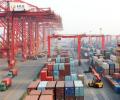
Chinese manufacturers are re-routing their products through the markets of other countries that India has Free Trade Agreements with.

Indian firms selling SAAS products have got a bonanza as companies meet, manage and sell remotely. The top five firms - Zoho, Freshworks HighRadius, Druva, and Icertis - account for 33 per cent of the market share. Chennai, India's SAAS centre, alone generates $1 billion in annual revenue. Yuvraj Malik explains how these companies are planning their next phase of growth.

A must-read excerpt from former RBI governor and former Rajya Sabha member Bimal Jalan's India: Priorities For The Future.

Transiting from "survival mode", which took most of the management time in FY21, the bank has been able to take a long-term view in terms of growth and preparing technology in the past 12 months.

In January, Visa's chief executive officer, Al Kelly, said during an earnings call that "there's been a burst of the balloon in valuations in the fintech world". Noting that the trend of lower valuations "is a helpful characteristic of the current environment", he added: "We will look for capabilities and management teams that will bring more value to Visa than we can bring ourselves." Data from KPMG's Pulse of Fintech H2'22 shows that global fintech investment - via mergers and acquisitions (M&As), private equity (PE) and venture capital (VC) firms - at $164.1 billion in 2022, was down 31 per cent over the year before. Indian fintechs held up better during this timeframe, attracting $6 billion, or a fall of 24 per cent.

Overseas investors have pulled out a net Rs 1,14,855.97 crore from the Indian markets in the current year so far, amid heightened geopolitical tensions and inflation concerns. Foreign portfolio investors have sold domestic equities worth Rs 48,261.65 crore so far this month, taking the year-to-date tally this year to a massive Rs 114,855.97 crore, according to depositories data. The exodus of foreign investors was largely owing to inflationary pressures and deepening global macroeconomic conditions following the Russia-Ukraine war, experts said.

We have our own problems for sure and they are not trivial, but for now, our economy is in not too bad a shape, our politics is as personality-driven and authoritarian as that of most countries in the world. We must make the best of what we have and not be excessively unhappy looking at the grass on the other side of the septic tank which may not be greener after all!, observes Shreekant Sambrani.

Priyansh Tiwari, 20 shares his incredible weight loss journey.

With infrastructure claiming a larger share, movement and distribution of cement is bound to change.

'When a Project Director is appointed, the whole organization -- including the Chairman ISRO -- works for his success. It is a lesson that has been of abiding value all through the other projects I have worked on,' recalls the late President, one of the earliest pioneers at ISRO.

7 key areas that the Budget must address to re-energise the infrastructure sector, suggests Vinayak Chatterjee.

PwC one of the big four audit firms, has expressed disappointment at the conviction of two former partners in the Satyam scam.

In the US, Zoho gets close to 80 per cent of its revenue from small companies, while the remaining comes from large ones.

For the first time, the bank is recruiting the CFO from outside its experienced talent pool of top management.

Private equity (PE) is set to play a bigger role in banks. Of 21 recommendations accepted by the Reserve Bank of India (RBI) out of 31 made by its Internal Working Group (IWG), its stance on non-promoter holdings in private banks is seen with excitement, though it doesn't refer to PEs explicitly. On non-promoter holdings in these banks, the RBI said this will be capped at 10 per cent of the paid-up voting equity share capital in the case "of natural persons and non-financial institutions and entities"; and "at 15 per cent for all categories of financial institutions, entities, supranational institutions, public sector undertaking, or the government." While this is a modification of the IWG's stance for the non-promoter holding in banks at up to 15 per cent, it does open up a huge window for PEs, all the same. This is because, while the RBI has remained silent on the eligibility of industrial houses for bank licences, fresh high-quality capital in large amounts can only come from PEs.

In a country where 35 to 40 per cent of food is not consumed, the government urgently needs to reduce wastage to an acceptable level.

For people at the bottom of the pyramid, which I would rather address as mass market or emerging class; the primary challenge in accessing banking services are not just affordability but applicability and accessibility of services.

A sharp sell-off in the Indian equities markets after a spike in crude oil prices should not be surprising. Historically there is a negative correlation between stock valuations in India and the price of Brent crude oil, which is the benchmark for the Indian crude oil basket. Between 2011 and 2014, crude oil traded above $100 a barrel for an extended period, the Sensex-trailing price/earnings (P/E) was 18X, on average, during the period, nearly 22 per cent lower than the current index P/E of 23X.

Real estate developer Supertech on Friday was declared bankrupt by the National Company Law Tribunal (NCLT), a move that could have a bearing on 25,000 home buyers of the firm's ongoing projects in the Delhi and NCR region. Acting on a petition filed by the Union Bank of India for non-payment of around Rs 432 crore worth dues, the bankruptcy court ordered the initiation of insolvency proceedings against real estate firm Supertech Ltd, one of the companies of Supertech group. The NCLT said "there has been a default in payment of the financial debt" and appointed Hitesh Goyal as the Interim Resolution Professional (IRP) superseding the board of Supertech Ltd.

India's top IT companies have shown a hiatus between their performance on the bourses in the pandemic period and earnings growth. The combined market cap of the top five IT companies - Tata Consultancy Services, Infosys, Wipro, HCL Technologies, and Tech Mahindra - is up 87 per cent since the end of March 2020. In comparison, the benchmark BSE Sensex is up 68 per cent during the period. So the industry beat the broader market by a big margin in the last one year.

Airlines are slashing salaries and re-negotiating vendor contracts as drastic fall in passengers has hurt revenue. Go First has cut staff salaries by around 16 per cent while IndiGo and SpiceJet are enforcing a leave without pay (LWP) policy and pay by the hour structure respectively to prune expenses. Vistara, which reversed pay cuts for junior staff including managers and cabin crew in March, is not touching employee salaries at the moment and instead focusing on vendor renegotiation and maximising cargo revenue. An Air India executive said efforts are on to pay salaries by 7th or 8th of June.

A US count of Pakistan's F-16 fleet has found that all the jets are present and accounted for, a report claims.

'Hacking of an ID or an account will have the same impact on a user in a city and one in a small town.' 'Security is like a railroad, you create it to last for every customer.'

Chinese alumina refining and metal smelting technologies have emerged as a match for the best anywhere in the world. In fact, Vedanta and Hindalco have bought technologies from China. Our aluminium makers will be haunted by twin fears of rising imports and low metal prices squeezing margins over a long time.

The post-crisis debate on capital account management focuses on matching instruments with vulnerabilities.

Employees across segments, including those involved in specialised jobs such as technology, compliance and risk management, have started leaving the bank fold in hordes, observes Tamal Bandyopadhyay.

Such listings will help internationalise our currency, give us economic heft, compel best in class regulations and further develop the professional-services ecosystem., says Amit Tandon.

What's different this time is that global financial stress -- which has its genesis in four policy choices made in recent years -- is juxtaposed with a more resilient real economy, observes Sajjid Z Chinoy, chief India economist at J P Morgan.

One thing is for sure: It smacks of the regulator's lack of confidence in the bank's board, points out Tamal Bandyopadhyay.

Tax benefit on WFH expenses, regulatory clarity on cryptos figure high on their wish list.

'Start-ups that generate a majority of their income in India are likely to opt for an Indian listing.'

'Facilitating conversion of well-run NBFCs into banks is urgently needed.'

While analysts remains overweight on financials, property, discretionary, industrials and materials, they maintain a neutral stance on pharma, telecom and energy; and underweight on staples, utilities, and IT services.

The government must send out a clear signal that leadership positions at regulatory bodies are not a preserve of retired government officials, argues A K Bhattacharya.

On November 12, 2021, the Reserve Bank of India (RBI) decided to ring in uniformity in asset classification and income recognition across all lending institutions. Shadow banks, or non-banking financial companies (NBFCs), like commercial banks, are to test non-performing assets (NPAs) on a daily basis and upgrade them to "standard assets" only when interest and principal arrears are settled by borrowers. This is going to create all manner of headaches for shadow banks and their clientele. Says Y S Chakravarti, managing director and chief executive officer (CEO), Shriram City Union Finance: "NPA levels will go up, especially of small borrowers.
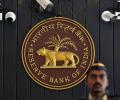
The Reserve Bank of India (RBI) is precariously balancing two opposing objectives - maintaining easy financial condition in the domestic market, while ensuring external stability - and economists have started taking note. They say India is going through the classic trilemma of the 'Impossible Trinity'. The RBI cannot have an independent monetary policy (setting domestic interest rates) in an environment of an open capital account and flexible exchange rates. What is even more complicated for the central bank now is that financial market stability overlays all the other three objectives.

Railway officials also indicated that possible 'sabotage' and tampering with the electronic interlocking system, which detects the presence of trains, led to the Friday accident.

Amid improving fundamentals, the bank is keen to double the corpus over the next year and a half, said a senior official.
 © 2026 Rediff.com - Advertise with us - Disclaimer - Privacy Policy - Sitemap - Feedback - About us - Terms of use - Grievances